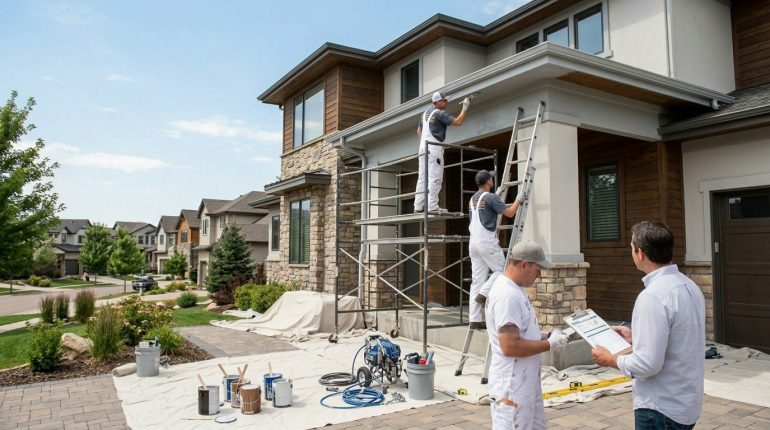
If you are planning to repaint your home, one of the first questions you probably have is, “How much will it actually cost?” The answer depends on more than the price of a gallon of paint. Your home’s size, the number of rooms, surface condition, preparation work, paint quality, number of coats, and whether you are painting the interior or exterior can all change the final price.
For homeowners researching painting cost in Denver, a reasonable starting point is to expect professional painting to cost roughly $2–$6 per square foot for many interior projects, while exterior projects can range from approximately $2.50–$8 per square foot, depending heavily on the surface and preparation required. These are planning ranges, not fixed quotes, because every home and project is different.
In this guide, we will break down house painting cost in Denver, explain what you are paying for, show realistic examples by home size, and explain how to compare painting estimates so you can make a confident decision.
What Is the Average Painting Cost in Denver?
The average painting cost in Denver varies considerably because contractors may price different scopes of work. Painting walls only is very different from repainting walls, ceilings, doors, baseboards, trim, and other surfaces throughout an entire home.
For interior projects, Denver homeowners can generally use $2–$6 per square foot as a broad planning range for professional painting. More detailed projects involving ceilings, trim, extensive preparation, textured surfaces, or difficult access can move toward the higher end of that range.
For exterior painting, the range can also be wide. Denver-area exterior projects may fall around $2.50–$8 per square foot, with siding or surface type, height, accessibility, scraping, repairs, and preparation influencing the final price.
A simple way to think about your budget is:
Painting cost = labor + paint and materials + surface preparation + additional repairs or specialty work.
That is why two homes with the same square footage can receive very different painting estimates.
How Much Does It Cost to Paint a House in Denver?
The cost to paint a house in Denver depends primarily on the size of the project and exactly what you want painted.
For example, painting only the walls of a relatively well-maintained home can be much less expensive than painting the walls, ceilings, doors, trim, and closets while also repairing damaged drywall.
As a rough planning example, a homeowner might see the following ranges:
| Home Size | Approximate Interior Painting Range* |
| 1,000 sq. ft. | $2,000–$6,000 |
| 1,500 sq. ft. | $3,000–$9,000 |
| 2,000 sq. ft. | $4,000–$12,000 |
| 2,500 sq. ft. | $5,000–$15,000 |
| 3,000 sq. ft. | $6,000–$18,000 |
*These figures are broad budgeting ranges based on commonly reported Denver-area interior rates and should not be treated as a contractor quote. The actual price can be substantially different depending on the scope, preparation, materials, and condition of the property.
Notice that home size alone does not determine the final price. A 2,000-square-foot house with clean, smooth walls and straightforward access may require significantly less labor than a similarly sized property with damaged surfaces, high ceilings, extensive trim, or multiple color changes.
Painting Cost in Denver Per Square Foot
Painting price per square foot is one of the most common ways homeowners compare painting costs. However, there is an important detail to understand: contractors do not always calculate square footage in exactly the same way.
Some estimates may use the home’s floor area as a convenient starting point, while others calculate the actual paintable surface area of the walls. A quote may also separate ceilings, trim, doors, cabinets, or other surfaces.
This means you should not automatically assume that the lowest painter cost per square foot is the best deal.
For example, imagine you receive two estimates for the same home:
- Contractor A charges less per square foot but includes basic preparation and walls only.
- Contractor B charges more per square foot but includes extensive preparation, primer, two finish coats, ceilings, and trim.
The second estimate may actually provide better value.
The most useful comparison is therefore not simply price per square foot, but price per square foot for the same scope of work.
What Does the Labor Cost for Painting Include?
For most professional painting projects, labor represents a significant portion of the total cost. Painting is not simply the act of rolling paint onto a wall. Much of the work happens before the first coat is applied.
The labor cost for painting can include moving or protecting furniture, covering floors, masking surfaces, cleaning walls, scraping loose paint, sanding, patching imperfections, caulking gaps, priming, cutting in edges, applying finish coats, and cleaning the workspace.
The more preparation and detail required, the more labor your project needs.
For example, a recently painted room with smooth walls may require relatively little preparation. An older room with nail holes, cracks, peeling paint, stains, or poor previous repairs can require considerably more work before painting begins.
This is one reason an extremely low estimate may not always be a bargain. If important preparation is excluded, you could end up paying for additional work later or receiving a finish that does not last as long.
Paint and Labor Cost: Where Does Your Money Go?
Homeowners sometimes assume most of their painting budget goes toward paint. In professional projects, that is often not the case.
The paint and labor cost is influenced by several components, including:
Labor: Time spent preparing surfaces, protecting the property, painting, and cleaning up.
Paint: The amount and type of paint required, including primer when appropriate.
Preparation materials: Sandpaper, caulk, patching compounds, masking materials, coverings, and other supplies.
Equipment: Ladders, sprayers, tools, extension equipment, and other professional equipment when needed.
Repairs: Drywall repairs, wood repairs, scraping, sanding, or other work required before painting.
Project complexity: High ceilings, staircases, detailed trim, difficult access, and multiple colors can increase labor requirements.
A professional estimate should make the scope clear enough that you understand what you are paying for.
What Factors Affect House Painting Prices in Denver?
There is no single price that applies to every Denver home. Understanding the major cost factors makes it much easier to understand why painting estimates vary.
Home Size and Paintable Area
Larger homes generally require more paint, preparation, and labor. However, the home’s listed square footage does not always represent the amount of surface being painted.
A 2,000-square-foot home with an open layout may have a different painting requirement from a 2,000-square-foot home divided into many rooms.
The number of walls, doors, windows, closets, ceilings, and other surfaces all influence the workload.
Surface Condition
The condition of the existing surface can have a major effect on price.
Smooth walls in good condition require less preparation. Walls with cracks, holes, peeling paint, stains, or damaged drywall require additional work.
Small drywall repairs may be manageable as part of a painting project, while extensive water damage or major structural repairs may require a specialist before painting can begin.
Number of Coats
The number of coats needed depends on the existing color, new color, paint coverage, surface condition, and product being used.
Changing from a light color to another light color may be relatively straightforward. A dramatic color change can require additional coats or primer to achieve an even finish.
Paint Quality
Paint is available at different quality levels, and the cheapest option is not necessarily the most economical over time.
Higher-quality paint can offer better coverage, durability, washability, and appearance. In some situations, better coverage can also reduce the amount of labor required to achieve the desired finish.
The right product depends on where it will be used. A busy hallway, kitchen, bedroom, bathroom, and exterior surface may all have different requirements.
Ceilings, Trim, Doors, and Other Surfaces
An estimate for painting walls is not necessarily an estimate for painting the entire room.
Adding ceilings, baseboards, crown molding, doors, window trim, closets, or other detailed surfaces increases the amount of preparation and application work.
Always confirm exactly which surfaces are included in a painting estimate.
Ceiling Height and Accessibility
A room with standard-height ceilings is generally easier to paint than a room with vaulted ceilings or difficult-to-reach areas.
Stairwells, two-story walls, exterior upper levels, narrow spaces, and other challenging areas can require additional equipment and labor.
Denver Weather and Exterior Conditions
Exterior painting requires additional consideration in Denver because weather conditions can affect scheduling and application.
Temperature, moisture, direct sunlight, and seasonal conditions can influence when exterior painting should be performed and how the coating cures. Proper preparation and choosing appropriate products for the surface and conditions are important for long-term performance.
Interior Painting Cost vs. Exterior Painting Cost
Interior and exterior painting should not be priced as though they are the same project.
Interior painting usually focuses on walls, ceilings, trim, doors, and other indoor surfaces. Preparation may include patching, sanding, caulking, cleaning, and priming.
Exterior painting involves additional considerations such as siding or stucco type, weather exposure, surface deterioration, scraping, power washing, ladders, lifts, and access.
For this reason, exterior projects can require substantially different labor and materials than interior projects.
For Denver homeowners, current published estimates place many interior projects around $2–$6 per square foot, while exterior projects can range from approximately $2.50–$8 per square foot depending on the scope.
How Much Does It Cost to Paint Different Parts of a House?
Not every homeowner needs a whole-house repaint. Sometimes the most practical solution is to paint specific rooms or surfaces.
A single bedroom can cost considerably less than painting an entire home, while a large living area with high ceilings may require more labor than a standard bedroom.
Bathrooms and kitchens can also require more detailed work because painters must work around fixtures, cabinets, appliances, tile, and other surfaces.
If you only need certain rooms painted, ask the contractor for a project-specific estimate rather than using the price of a whole-house repaint as your budget.
The same principle applies to exterior work. Painting only trim, shutters, doors, or a specific section of siding will have a different cost from repainting the entire exterior.
Is It Cheaper to Paint a House Yourself?
DIY painting can reduce the amount you spend on professional labor, but it does not make the project free.
You still need to purchase paint, brushes, rollers, trays, drop cloths, masking supplies, ladders, patching materials, primer, and other equipment. You also need to invest your own time.
For a small room with good walls, DIY painting may be manageable for an experienced homeowner. Larger projects can become much more demanding, especially when ceilings, detailed trim, high walls, extensive preparation, or exterior surfaces are involved.
Professional painters bring experience in preparation, application, product selection, surface protection, and project organization. The value is not simply the paint on the wall—it is the complete process and finished result.
How to Get an Accurate Painting Estimate in Denver
Online calculators and general price ranges are useful for budgeting, but the best way to determine your actual painting cost is to have the project properly evaluated.
Start by defining exactly what you want painted. Decide whether the project includes walls only or also ceilings, trim, doors, closets, cabinets, or other surfaces.
Next, identify any obvious preparation requirements. Tell the painter about cracks, holes, peeling paint, water stains, damaged drywall, or previous paint problems.
When comparing estimates, make sure each contractor is pricing the same scope of work. Ask about the preparation process, paint brand and product, number of coats, primer, repairs, cleanup, and any exclusions.
A detailed written estimate should make it easier to understand what is included rather than giving you one unexplained number.
How to Compare House Painting Estimates
Getting multiple estimates can help you understand the market, but comparing them requires more than looking at the final price.
A $5,000 estimate and a $7,000 estimate may appear far apart until you examine what each includes.
Look at the preparation, number of coats, surfaces being painted, paint quality, repair work, materials, cleanup, and project scope. Also consider the contractor’s experience, communication, reviews, insurance, and professionalism.
The goal should be to find a contractor offering a fair price for a clearly defined scope—not simply the cheapest number.
A good painting estimate should answer a simple question: “What exactly am I getting for this price?”
How to Save Money on Painting Without Sacrificing Quality
Reducing painting costs does not necessarily mean choosing the cheapest paint or contractor.
One of the best ways to control your budget is to prepare your project before requesting estimates. Decide which rooms and surfaces actually need painting, choose your colors in advance when possible, and communicate any repairs or special requirements.
You can also ask whether painting several rooms at the same time provides better project efficiency than completing them separately.
Most importantly, avoid cutting necessary preparation simply to reduce the initial estimate. Poor preparation can lead to peeling, uneven coverage, visible imperfections, and an earlier need for repainting.
A properly planned painting project can provide better value because the finish is designed to look good and remain durable.
When Should You Repaint Your Denver Home?
There is no universal repainting schedule because paint longevity depends on the surface, product, exposure, traffic, and quality of the previous work.
Interior walls in high-traffic areas may need attention sooner than lightly used rooms. Exterior surfaces are exposed to sunlight, temperature changes, moisture, and other environmental conditions.
Instead of repainting solely according to a calendar, look for signs that your home needs attention. Fading, peeling, cracking, stains, worn surfaces, and deteriorating exterior coatings are all reasons to have the property evaluated.
If the existing paint is failing, addressing the underlying surface condition before applying new paint is particularly important.
What Should Be Included in a Professional Painting Quote?
A quality painting quote should clearly describe the work being performed. This helps you avoid misunderstandings and makes it easier to compare different contractors.
Your estimate should ideally identify the surfaces being painted, preparation requirements, repairs, primer, number of coats, paint products, materials, cleanup, and any exclusions.
For larger projects, it is also useful to understand the expected schedule and how the property will be protected during the work.
The clearer the scope, the easier it is for both the homeowner and painting company to have the same expectations.
Get a Clear Painting Estimate for Your Denver Home
Knowing the painting cost in Denver can help you create a realistic budget, but an online price range can only take you so far. Your home’s size, surface condition, preparation needs, paint selection, accessibility, and project scope all influence the final price.
For many Denver interior projects, a broad starting point of $2–$6 per square foot can help with initial planning, while exterior projects may fall around $2.50–$8 per square foot depending on the property and scope.
The most important thing is to compare complete scopes rather than isolated prices. A professional estimate should tell you what work will be completed, what materials will be used, and what is included in the final cost.
If you are planning to repaint your Denver home, Royal Painting Co. can help you understand the work involved and provide a project-specific estimate based on your home’s actual needs.
Frequently Asked Questions
How much does it cost to paint a house in Denver?
The cost varies according to home size, surfaces, preparation, paint quality, and labor. For interior projects, a broad Denver planning range is around $2–$6 per square foot, while exterior projects can range from approximately $2.50–$8 per square foot. Your actual quote may be higher or lower depending on the project scope.
How much do painters charge per square foot in Denver?
Professional painters may use square-foot pricing as a starting point, but there is no single rate that applies to every project. The painter cost per square foot depends on the surfaces being painted, preparation, number of coats, accessibility, paint products, and other requirements.
What increases house painting prices in Denver?
The most common factors are extensive surface preparation, damaged walls, high ceilings, difficult access, detailed trim, multiple colors, additional coats, premium materials, and exterior surfaces that require scraping or significant preparation.
Is painting a house cheaper if I do it myself?
DIY painting can reduce labor expenses, particularly for small and straightforward rooms. However, you still pay for paint, tools, materials, preparation supplies, and your own time. Professional painting can be more valuable for larger projects, difficult surfaces, extensive preparation, and exterior work.
How can I get an accurate painting estimate in Denver?
The best approach is to have a professional evaluate the actual property and provide a detailed written estimate. Make sure the quote explains the surfaces being painted, preparation, repairs, paint products, number of coats, labor, materials, and cleanup so you can compare estimates accurately.