
Best Exterior Paint Colors for Denver Homes in 2026
Choosing the right exterior paint color can completely change how a Denver home looks from the street. But the best exterior paint colors for Denver are not simply the colors that happen to be trending this year. Denver's strong sunlight, changing weather, architecture, brick exteriors, landscaping, and surrounding mountain environment can all affect how a color looks and how well it holds up. For homeowners searching for the best exterior paint colors Denver has to offer in 2026, the goal is to find a color that looks good in natural light, works with the home's existing materials, complements the neighborhood, and remains appealing for years. In this guide, you'll find popular exterior house colors for Denver, practical color combinations, ideas for brick and traditional homes, and simple ways to test a color before committing to a full exterior painting project.What Are the Best Exterior Paint Colors for Denver Homes in 2026?
The best exterior color depends on the home's architecture, existing materials, natural surroundings, and the look you want to achieve. However, warm whites, soft greiges, earthy neutrals, muted greens, deep blue-grays, and natural brown tones are particularly useful starting points for Denver homes. Current 2026 exterior color trends are moving toward warm neutrals and nature-inspired colors, including soft whites, taupes, greens, and earthy browns. Designers are also using deeper colors such as charcoal, dark green, and blue-gray as body or accent colors. For Denver homeowners, the strongest approach is not necessarily choosing the trendiest color. It is choosing a shade that works with the home's brick, stone, siding, roof, landscaping, and natural light.1. Warm White and Cream Exterior Paint Colors
Warm whites are a reliable choice when you want a clean, bright exterior without making the home feel overly stark. Unlike a very cool white, a warm white usually contains subtle beige, cream, or yellow undertones that can work well with natural materials. These shades can be especially useful for traditional, transitional, and modern Denver homes. They also provide flexibility when choosing darker trim, natural wood, or a contrasting front door. A warm white exterior can be paired with:- Dark charcoal or deep gray trim
- Natural wood accents
- Black or bronze doors
- Stone foundations
- Muted green landscaping
2. Warm Greige and Taupe
Greige combines characteristics of gray and beige, making it one of the most flexible choices for Denver home exterior paint colors. It can look modern without becoming too cold and traditional without feeling dated. Warm greige works particularly well when a home already contains natural stone, brick, wood, or beige architectural details. It can also provide a softer alternative to a dark gray exterior. For a balanced exterior color combination, consider a warm greige body with a creamy white trim and a darker front door. Taupe offers a similar advantage but generally has a stronger brown or earthy character. These colors can help a home feel connected to Denver's natural surroundings rather than appearing disconnected from them.3. Sage, Olive, and Muted Green
Green exterior paint colors are becoming increasingly popular because they connect a home visually with trees, plants, grass, and other natural surroundings. For Denver homes, muted greens can be particularly effective because they provide color without becoming excessively bright. Sage green creates a softer appearance, while olive and deeper green can produce a richer, more traditional look. Green can also work well with brick. Instead of fighting the warm tones already present in the brick, an earthy green can create a natural transition between the home's structure and its landscaping. For a more traditional palette, try a muted green body with cream trim and a dark brown or bronze door. For a modern appearance, pair a deeper green with charcoal accents. Nature-inspired greens and deeper earthy shades are among the exterior color directions receiving attention in 2026.4. Blue-Gray and Deep Blue Exterior Colors
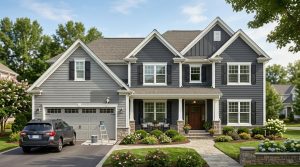
Blue-gray is another strong option for homeowners who want more color than a neutral provides without choosing an extremely bright shade. A muted blue-gray can make a home look sophisticated while remaining relatively easy to coordinate with white, cream, charcoal, or natural wood accents. Deep blue can create a stronger visual statement. It works especially well when the architecture can support a darker exterior and when the surrounding materials provide enough contrast. For example, a deep blue exterior with warm white trim and a natural wood door can create a classic combination. A lighter blue-gray body with white or cream trim can produce a softer appearance. The key is to test blue in different parts of the property because natural light can significantly change how cool or warm the color appears.5. Earthy Brown and Natural Wood-Inspired Colors
Brown is becoming more relevant in 2026 as homeowners look for warmer and more natural alternatives to stark black or cool gray. Earthy brown can work particularly well with homes surrounded by mature trees, natural stone, wood features, or other warm materials. It can also provide a good fit for rustic and traditional architecture. Instead of choosing an extremely dark brown, consider medium or muted earthy shades. These can provide depth while maintaining a more natural appearance. Brown can also be used selectively on shutters, doors, trim, or architectural details instead of covering the entire exterior.6. Charcoal and Dark Gray
Dark gray remains a useful option for homeowners who want a modern exterior. Charcoal can provide strong contrast against lighter trim and can work well on contemporary homes. However, dark exterior colors require more consideration than lighter neutrals. Dark surfaces can absorb more heat, and darker colors can make fading or dirt more noticeable over time. Lighter exterior colors generally reflect more light and can be easier to maintain visually. If you like the appearance of charcoal but are concerned about using it across the entire home, consider using it on shutters, trim, the garage door, or the front door instead.Best Exterior Paint Color Combinations for Denver Homes
Choosing a single color is only part of the process. The strongest exterior paint color combinations Denver homeowners use usually include a main body color, a trim color, and one or two accent colors.Warm Greige + Cream + Dark Brown
This combination provides a warm, traditional appearance. The greige keeps the exterior understated, while cream adds definition around windows and architectural details. A dark brown door can add depth.Soft White + Charcoal + Natural Wood
A soft white body creates a clean foundation. Charcoal can define trim or architectural elements, while natural wood adds warmth.Sage Green + Warm White + Bronze
Muted green provides the primary color, warm white keeps the combination balanced, and bronze creates a subtle accent for the door, lighting, or hardware.Blue-Gray + Cream + Dark Gray
Blue-gray adds personality without becoming overly bright. Cream provides contrast, while dark gray can be used for shutters, doors, or other smaller elements.Earthy Brown + Warm Beige + Deep Green
This palette works particularly well with landscaping and natural materials. It creates a grounded appearance that can suit traditional and rustic homes.How Denver's Climate Can Affect Exterior Color Selection
Color selection in Denver should account for more than appearance. The local environment can influence both how paint looks and how the exterior ages. Denver has strong sunlight and significant changes in temperature. Local painting guidance also highlights intense sunlight, dry conditions, and temperature swings as important factors when selecting exterior paint. This means homeowners should consider the amount of direct sunlight different sides of the house receive. A color that looks perfect on a shaded sample may appear noticeably different on a wall receiving direct afternoon sun. The same principle applies to undertones. A gray with a blue undertone may look cooler in one area of the house, while a warm greige can appear noticeably warmer in strong sunlight. The paint itself also matters. Exterior color should be selected together with an appropriate exterior coating and surface preparation rather than treating color as the only factor affecting durability.Best Exterior Colors for Denver Brick Homes
Brick creates a different color-selection challenge because it often remains exposed rather than being painted. If your Denver home has red, orange, brown, or mixed-color brick, start by identifying the dominant tones in the brick. Your paint should complement those colors rather than compete with them. Warm white, cream, taupe, muted green, charcoal, and certain blue-gray shades can work with different brick tones. The right choice depends on the specific brick and the home's other materials. For historic or character-rich homes, the architecture should also influence the palette. Denver has neighborhoods with brick bungalows, Victorian homes, and other older housing styles where trim and architectural details can be an important part of the overall appearance. Rather than covering every detail with one color, consider using the paint scheme to emphasize windows, porch details, trim, doors, and other features that give the house its character.How to Choose Exterior Paint Colors Based on Your Home's Architecture
The same color can look completely different depending on the home's shape and architectural style. A modern home may work well with a simple two-color scheme, such as warm white and charcoal. A traditional home may benefit from three coordinated colors that distinguish the siding, trim, and door. Homes with decorative trim can also handle more contrast because the color helps highlight architectural details. Simpler homes often look better with fewer colors and clearer visual lines. Before selecting a color, look at:- Roof color and material
- Brick, stone, stucco, or siding
- Window frames
- Existing trim
- Garage door
- Front door
- Porch and railings
- Driveway and hardscaping
- Landscaping
- Nearby homes
How to Test Exterior House Paint Colors Before Painting
A paint chip is not enough to make a final decision. Exterior colors can change significantly depending on sunlight, shade, surrounding materials, and the time of day. Start by choosing two or three potential colors rather than testing a large number at once. Apply reasonably large samples to an inconspicuous section of the exterior or use appropriate sample boards. Look at the samples in the morning, afternoon, and evening. Also check them from different sides of the property. Pay particular attention to the undertones. A color that looks neutral inside a store may appear noticeably yellow, blue, green, or gray outside. Testing is especially important for dark colors and strong accent colors. A color that looks attractive on a small swatch can become much more visually dominant when applied across an entire exterior.What Exterior Colors Help Improve Curb Appeal?
Curb appeal is not about choosing one universally "best" color. It comes from creating a coordinated exterior where the main paint color works with the architecture, landscaping, roof, windows, trim, and entrance. Neutral colors remain popular because they provide flexibility, while carefully selected greens, blues, browns, and darker accents can give a home more personality. Current 2026 design coverage shows continued interest in warm neutrals and nature-inspired colors rather than relying only on the cooler gray-and-white combinations that were prominent in previous years. For homeowners preparing to sell, a restrained palette can also make it easier for potential buyers to picture the property with their own preferences. That does not mean every house should be white or beige. The most important consideration is whether the colors look intentional and compatible with the property.How to Pick the Right Exterior Color for Your Denver Home
Start with the parts of your house that will not change. Your roof, brick, stone, windows, and other permanent materials should guide the color palette. Next, decide how much contrast you want. A low-contrast combination creates a softer, more understated appearance, while stronger contrast draws attention to architectural features. Then consider the surrounding environment. A home surrounded by mature trees may work naturally with earthy greens and warm neutrals, while a contemporary property may suit a simpler combination of warm white, charcoal, or blue-gray. Finally, test your shortlisted colors in actual outdoor lighting before making the final decision. A practical selection process looks like this:- Identify the home's permanent exterior materials.
- Choose two or three main color families.
- Select complementary trim and accent colors.
- Test large samples outside.
- Check the samples in direct sun and shade.
- Compare the colors with the roof, brick, stone, and landscaping.
- Choose an exterior paint system appropriate for the home's surfaces and local conditions.