Commercial painting is rarely priced by the gallon of paint alone. The size of the property, surface condition, preparation work, number of coats, building height, access requirements, coating system, and project schedule can all change the final estimate. That is why two Denver businesses with similarly sized buildings can receive very different painting quotes.
For businesses planning a repaint in 2026, a useful starting point is to think in terms of
commercial painting cost per square foot, then adjust that estimate based on the actual scope of work. Current Denver-area commercial painting pricing guides show broad ranges for interior and exterior projects, with straightforward jobs generally costing less and projects involving difficult access, extensive preparation, repairs, or specialty coatings costing more.
This guide explains what businesses in Denver should consider when budgeting for commercial painting, including typical pricing ranges, office painting costs, factors that increase a quote, and what should be included in a professional estimate.
What Is the Commercial Painting Cost in Denver in 2026?
For budgeting purposes,
commercial painting in Denver can commonly fall around
$1.25 to $4.00+ per square foot, depending on whether the project is interior or exterior, the property type, preparation requirements, surface condition, access, and coating specifications. More specialized industrial or difficult projects can exceed these ranges.
These figures should be treated as planning ranges rather than fixed prices. Commercial painting contractors do not normally determine the final cost from building size alone. A 10,000-square-foot office with clean walls and easy access can require a very different scope from a 10,000-square-foot warehouse with high ceilings, damaged surfaces, lift requirements, and extensive preparation.
For that reason, the most reliable commercial painting estimate comes from reviewing the actual property and defining exactly what surfaces, preparation, coatings, and scheduling requirements are included.
Commercial Painting Cost Per Square Foot
A per-square-foot calculation is useful because it gives property owners and managers a quick way to create an initial budget.
Current Denver-area pricing information places many standard commercial interior projects somewhere around
$1.25 to $4.00 per square foot, while exterior work can range from roughly
$1.50 to $4.00 or more per square foot, depending on the building and scope. Some straightforward projects may fall below these ranges, while specialty coatings, difficult access, extensive repairs, and complex commercial environments can push costs higher.
For example, a simple 10,000-square-foot interior project at $2 per square foot would produce a preliminary budget of approximately $20,000. At $3 per square foot, the same square footage would represent approximately $30,000.
That calculation is only a starting point. The important question is what the contractor is including in that price.
Commercial Painting Prices in Denver by Property Type
Commercial painting prices vary considerably according to how the property is used. An office, warehouse, restaurant, medical facility, and retail space can have very different requirements even when their floor areas are similar.
Office Painting Cost in Denver
Office painting is often relatively predictable when the walls are in good condition and the space has standard ceiling heights. Current Denver-area pricing guides place many office interiors in the general range of approximately
$1.45 to $3.50 per square foot, depending on the scope and level of preparation.
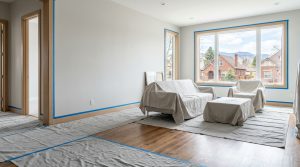
A small professional office may require only wall preparation, two coats of paint, and protection of floors and fixtures. A larger office renovation may involve multiple colors, accent walls, ceilings, doors, trim, occupied work areas, furniture movement, and evening or weekend scheduling.
For an office, the usable floor area also does not necessarily equal the paintable surface area. Walls, ceilings, doors, trim, and other surfaces may all be included in the scope, so businesses should ask exactly how the contractor calculated the square footage.
Retail Store Painting Costs
Retail spaces can require more detailed planning because painting often needs to happen without disrupting customers or daily operations. A contractor may need to work after hours, divide the project into phases, protect merchandise, or coordinate with other trades.
Higher ceilings, feature walls, exposed surfaces, frequent color changes, and tight completion deadlines can also increase labor requirements. For a retail property, the cheapest estimate is not necessarily the simplest comparison. The scope and schedule should be reviewed alongside the price.
Warehouse and Industrial Painting Costs
Warehouses can have large paintable areas, but their high ceilings and difficult-to-reach surfaces can significantly affect labor and equipment costs.
Denver-area pricing data shows
warehouse projects can sometimes have lower per-square-foot rates because of their large, relatively open surfaces, while specialized industrial coatings and difficult areas can increase the cost substantially.
A warehouse estimate may need to account for lift equipment, high walls, structural steel, exposed ceilings, concrete floors, safety requirements, surface cleaning, and specialized coatings.
Restaurant and Hospitality Painting
Restaurants and hospitality properties often require careful scheduling because painting can interfere with customers, employees, food-service operations, and inspections.
Walls may also require more frequent repainting because of grease, moisture, stains, and heavy traffic. The type of surface preparation and coating selected can therefore have a meaningful effect on the final commercial painting cost.
Medical and Professional Facilities
Medical offices, dental practices, and other professional facilities can require specialized coatings, careful surface preparation, low-odor products, and detailed protection of equipment and finished areas.
The project may also need to be completed in phases so the business can remain operational. These scheduling and protection requirements can add labor even when the actual area being painted is relatively small.
What Factors Affect Commercial Painting Cost in Denver?
The biggest mistake when comparing commercial painting prices is looking only at the square-foot rate. The final cost is a combination of labor, materials, preparation, access, project complexity, and scheduling.
1. Surface Preparation
Preparation is one of the most important cost variables.
A surface that is clean, sound, and already coated properly requires much less work than one with peeling paint, cracks, holes, stains, damaged drywall, deteriorated caulking, or other surface problems.
Commercial painting preparation may include cleaning, scraping, sanding, patching, caulking, priming, and other repairs before the finish coats are applied.
A quote that includes thorough preparation may initially look more expensive than one that simply covers the existing surface. However, comparing the scope of preparation is essential because paint applied over poorly prepared surfaces may not deliver the same durability.
2. Number of Coats
The number of coats required depends on the existing color, new color, paint product, surface condition, and desired finish.
A straightforward repaint may require fewer coats than a major color change. Dark colors, stains, porous surfaces, and uneven existing finishes may also require additional primer or finish coats.
The estimate should clearly state whether primer and the number of finish coats are included.
3. Paint and Coating Selection
Commercial properties often need more than standard wall paint.
Depending on the application, a contractor may recommend products designed for high traffic, moisture resistance, chemical exposure, exterior durability, or specific industrial conditions.
Higher-performance coatings can increase material costs, but the right product can be important when the painted surface needs to withstand demanding conditions.
4. Building Height and Accessibility
A single-story office with easy access is very different from a multi-story commercial building.
High walls, stairwells, atriums, exterior elevations, and difficult-to-reach areas may require ladders, scaffolding, lifts, additional labor, or more time. Equipment requirements can therefore have a direct effect on commercial painters' costs in Denver.
5. Building Condition
A building that has been maintained regularly may need relatively little preparation. An older property with damaged or neglected surfaces can require substantially more work before painting begins.
Property owners should ask whether repairs are included in the painting estimate or priced separately.
6. Project Schedule
Commercial businesses often cannot shut down for several days simply to have their property painted.
Night work, weekend work, phased painting, restricted access, and accelerated schedules can increase labor requirements. If keeping the business operational is important, the contractor should understand the property's working hours before preparing the estimate.
7. Furniture, Equipment, and Protection
Commercial painting is not limited to applying paint. Crews may need to protect floors, furniture, equipment, fixtures, displays, windows, landscaping, or other finished surfaces.
The amount of protection and moving required can affect the labor portion of the project.
8. Denver Weather and Exterior Conditions
Exterior commercial
painting in Denver also has to account for local weather conditions. Temperature, precipitation, wind, sunlight, and surface conditions can affect when exterior coatings can be applied and how the project is scheduled.
Denver's high-altitude environment also means exterior surfaces receive significant UV exposure. The coating system selected for an exterior project should therefore be appropriate for the property's exposure and surface type.
How to Estimate the Cost of a Commercial Painting Project
A simple preliminary calculation can help a business establish a working budget before requesting estimates.
Start by determining the approximate paintable area rather than relying only on the property's total floor area. Then multiply that area by a reasonable planning rate based on the type and complexity of the project.
For example, consider a hypothetical 10,000-square-foot commercial interior:
10,000 square feet × $2.00 = $20,000
At a $3.00 planning rate:
10,000 square feet × $3.00 = $30,000
This does not mean the final project will cost exactly $20,000 or $30,000. The actual quote could be lower or higher after the contractor evaluates preparation, ceilings, doors, trim, access, coatings, repairs, scheduling, and other requirements.
The calculation is most useful for creating an initial budget, not for replacing a professional site assessment.
What Should Be Included in a Commercial Painting Estimate?
A detailed estimate makes it much easier to compare commercial painting prices in Denver.
Before accepting a proposal, make sure you understand what the contractor has included. A professional estimate should clearly describe the surfaces being painted, preparation work, paint or coating system, number of coats, labor, materials, protection, cleanup, and expected schedule.
It should also identify exclusions. For example, drywall replacement, major carpentry, extensive masonry repairs, structural repairs, or other work may not be included in a standard painting proposal.
A clear estimate should answer basic questions such as:
- Which areas and surfaces are included?
- What preparation will be performed?
- How many coats will be applied?
- What paint or coating will be used?
- Are primer and materials included?
- Who handles furniture and equipment?
- What protection and cleanup are included?
- How long is the project expected to take?
- Will the work be completed during business hours or after hours?
- Are repairs included or priced separately?
Having these details in writing helps prevent misunderstandings and makes different proposals easier to compare.
How to Reduce Commercial Painting Costs Without Cutting Corners
Controlling a commercial painting budget does not necessarily mean choosing the lowest bid. A better approach is to reduce unnecessary work while maintaining the preparation and coating requirements the property actually needs.
Planning the project early can give a contractor more flexibility with scheduling. Completing related preparation or repairs before the painting crew arrives can also reduce delays.
It can also be useful to repaint high-traffic areas before deterioration becomes extensive. Waiting until surfaces have severe peeling, cracking, water damage, or other problems can increase the amount of preparation required.
For occupied businesses, planning the work in phases can also reduce operational disruption. Instead of closing an entire property, a contractor may be able to complete sections according to the business's schedule.
The goal should be a clearly defined scope that balances upfront cost, durability, appearance, and the operational needs of the business.
How to Compare Commercial Painting Quotes in Denver
When several commercial painting contractors provide estimates, compare the
scope of work, not just the final dollar amount.
One contractor may quote a lower price because fewer preparation tasks are included. Another may include additional coats, better surface preparation, more extensive protection, or a different coating system.
For example, a $25,000 proposal is not automatically less expensive than a $30,000 proposal if the $25,000 estimate excludes important preparation or finish work that will later become an additional charge.
A useful comparison should look at the same categories across every proposal: preparation, repairs, materials, coats, surfaces, labor, equipment, protection, cleanup, warranty terms, and schedule.
This gives the property owner a much clearer understanding of what each commercial painting price actually represents.
How to Get an Accurate Commercial Painting Estimate in Denver
Online pricing ranges are useful for planning, but a property-specific estimate is the best way to determine the expected cost of a commercial painting project.
Start by identifying the property type, approximate size, interior or exterior scope, surfaces that need painting, preferred timeline, and any known repair requirements. Photos can help a contractor understand the general condition, but an on-site assessment may be necessary for a detailed proposal.
During the estimate, ask the contractor to explain the preparation process and coating system rather than focusing only on the final price.
For a Denver commercial property, the final estimate should reflect the building's actual condition and the practical requirements of completing the work safely and efficiently.
Frequently Asked Questions About Commercial Painting Cost in Denver
How much does commercial painting cost per square foot in Denver?
Commercial painting can commonly range from roughly
$1.25 to $4.00+ per square foot in Denver-area projects, depending on the property type, interior or exterior scope, preparation, surface condition, access, coatings, and scheduling. Some straightforward projects may fall outside this range, while complex or specialty projects can cost more.
How much does it cost to paint an office in Denver?
Office painting costs depend on the size of the space and the amount of preparation required. Denver-area commercial pricing guides place many office projects within a broad range of approximately
$1.45 to $3.50 per square foot, but the final price can change based on walls, ceilings, trim, repairs, access, furniture protection, and scheduling.
Is exterior commercial painting more expensive than interior painting?
It can be. Exterior projects may require additional surface preparation, weather-related scheduling, specialized coatings, ladders, scaffolding, lifts, and other access equipment. However, the actual difference depends on the building and project scope, so interior and exterior prices should be compared based on the work included rather than assuming one will always cost more.
What makes commercial painting more expensive?
The most common cost drivers include extensive surface preparation, damaged surfaces, additional coats, premium or specialty coatings, high ceilings, difficult access, lift or scaffold requirements, detailed architectural features, furniture or equipment protection, and work that must be completed outside normal business hours.
How can I get an accurate commercial painting price for my Denver property?
The best approach is to request a detailed commercial painting estimate based on the actual property. Provide the contractor with the building size, areas to be painted, preferred schedule, and any known surface issues. An on-site assessment can then establish the preparation, materials, labor, equipment, and timeline required for the project.
Final Thoughts on Commercial Painting Prices in Denver
The
commercial painting cost in Denver depends on much more than the size of a building. Square footage provides a useful starting point, but surface preparation, property type, paint system, accessibility, building condition, equipment, and scheduling can have a major effect on the final price.
For 2026 budgeting, Denver businesses can use broad per-square-foot ranges to establish an initial project budget, but a detailed property-specific estimate is necessary before making a final decision. Current local pricing guides show substantial variation between offices, warehouses, retail properties, medical facilities, and more complex commercial projects.
The most useful commercial painting estimate is one that clearly explains what you are paying for. When labor, preparation, materials, coatings, equipment, protection, and cleanup are clearly defined, you can compare proposals more accurately and plan your project with fewer surprises.
For businesses preparing to repaint a commercial property, the next step is to assess the actual condition and scope of the building and request a detailed estimate based on the work required.